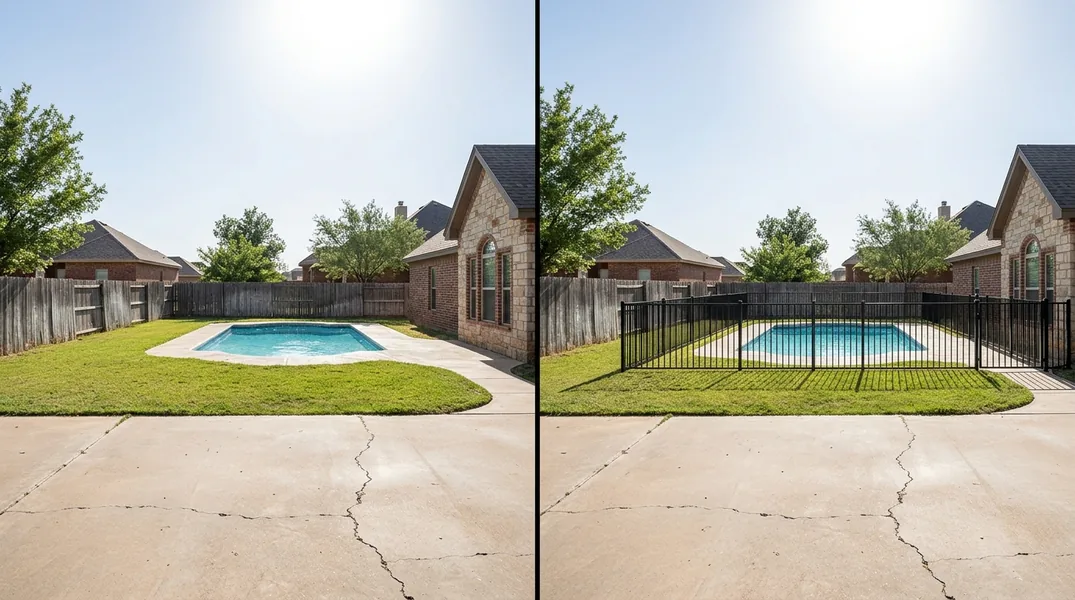
Why Pool Fence Regulations Matter in Texas
If you own a swimming pool in Lubbock, you're not just responsible for maintaining clean water and safe equipment. You're also legally obligated to install proper safety barriers that meet state and local codes. Pool fencing is one of the most important investments you can make as a pool owner, not only to protect children and pets but also to comply with Texas water safety laws.
Texas takes pool safety seriously. The state has adopted comprehensive regulations designed to prevent accidental drowning and unauthorized access to pools. These aren't suggestions or nice-to-have features. They're legal requirements that can result in fines, liability issues, or worse if ignored. Before you call a contractor to install a pool fence in Lubbock, understanding what the code actually requires will help you make informed decisions and avoid costly mistakes.
Understanding Pool Fence Height Requirements in Texas
One of the most fundamental pool fence code requirements in Texas is height. The state mandates that residential pool barriers must be at least four feet tall, measured from the ground to the top of the fence. This height standard applies whether you're installing Wood & Privacy Fence Installation, Vinyl & PVC Fence Installation, or Aluminum & Ornamental Iron Fencing. The four-foot minimum exists because research shows it's an effective deterrent for small children attempting to access a pool unsupervised.
However, height alone isn't enough. Texas code also specifies that vertical spacing between fence slats or boards cannot exceed four inches. This gap restriction prevents young children from squeezing through or getting stuck between boards. If you're considering a fence style with horizontal rails or openings, those openings must also be limited to prevent a sphere four inches in diameter from passing through. When you're evaluating fence options for your pool area, ask potential installers whether their design meets these specific spacing requirements. Many homeowners overlook this detail and end up with a fence that's the right height but doesn't comply with gap regulations.
Self-Closing Pool Gate Requirements: What You Need to Know
Perhaps the most commonly overlooked pool fence code requirement involves the gate itself. Texas requires that any gate providing access to a pool area must be self-closing and self-latching. This means the gate should automatically swing shut and lock without requiring manual intervention. A self-closing pool gate is crucial because it eliminates the human error factor. Even the most attentive parent can forget to close a gate, but an automatic mechanism ensures the barrier remains in place at all times.
The self-latching mechanism must function reliably and should be positioned at a height that's inaccessible to small children, typically at least 54 inches from the ground. The latch should require a deliberate action to open, not just a gentle push. When discussing pool fence installation with contractors in Lubbock, specifically ask about the type of gate hardware they recommend and whether it meets Texas specifications. Some contractors may try to upsell you on premium gate systems, while others might suggest basic options that technically comply but lack durability. Understanding this requirement helps you evaluate proposals fairly and ensure your gate will actually function as intended for years to come.
Additional Pool Fence Code Requirements and Barrier Options
Beyond height and gates, Texas pool fence regulations address several other important details. The barrier must completely surround the pool with no gaps or openings that could allow unauthorized access. This means your fence needs to connect properly at corners and gates, with no shortcuts or incomplete sections. Additionally, the fence must be constructed so that it's difficult to climb. This is why many inspectors pay attention to the spacing of horizontal elements. A fence with widely spaced horizontal rails might meet the vertical gap requirement but fail the climbability standard.
You also need to understand that pool barriers can take different forms. While a traditional fence is most common, Texas code allows for other barrier types including walls of a building, safety pool covers, and pool alarms. However, if you're installing a dedicated pool fence, the traditional barrier approach is most straightforward for residential properties. Whether you choose Chain Link Fence Installation or another material, ensure your contractor is familiar with pool-specific codes. Not all fence companies specialize in pool barriers, and using a contractor unfamiliar with these requirements could result in a non-compliant installation that requires expensive modifications.
Local Lubbock Considerations and Permit Requirements
While Texas state law sets the baseline requirements, your city or county may have additional regulations. Lubbock has its own building codes and permit processes that apply to pool fencing. Before installation begins, you'll need to obtain a permit from the city. This permit process typically involves submitting plans showing your pool location, fence design, gate specifications, and measurements. The permit ensures that your planned installation will be inspected and approved before and after completion.
Many homeowners skip the permit step thinking they can save time and money, but this is a serious mistake. Without a permit, your fence may not pass inspection, and you could face fines or be required to remove and reinstall the entire barrier. Additionally, if someone is injured at your pool and you don't have proper permits or code-compliant barriers, your liability insurance may not cover the incident. When you contact a contractor for your free estimate, confirm that they handle the permit process and understand local Lubbock requirements. A professional contractor should guide you through these requirements, not leave you to figure them out alone.
Getting Expert Help: When to Call a Professional Pool Fence Installer
Given the complexity of pool fence code requirements and the importance of compliance, hiring a professional installer is the smart choice. While some homeowners attempt DIY fence installation, pool fencing is one area where professional expertise genuinely matters. A contractor experienced in pool barriers understands the nuances of spacing requirements, gate mechanics, local permits, and inspection standards. They can help you select materials and designs that not only meet code but also complement your landscape and provide years of reliable service.
When evaluating contractors in Lubbock, ask specific questions about their pool fence experience. How many pool barriers have they installed? Are they familiar with current Texas code requirements? Do they handle permits and inspections? What's their pricing structure, and does it include permit costs? The right contractor will answer these questions confidently and provide references from previous pool fence customers. Lubbock Fence specializes in residential fencing and understands the specific requirements for pool barriers in our area. If you're ready to move forward with a pool fence installation, call us at (806) 702-7964 or request a free estimate today. We'll review your pool layout, explain your options, and ensure your installation meets all Texas and local code requirements.
Looking for a professional fence contractor in Lubbock? Lubbock Fence responds fast for all your fence needs.
Get a Free Quote